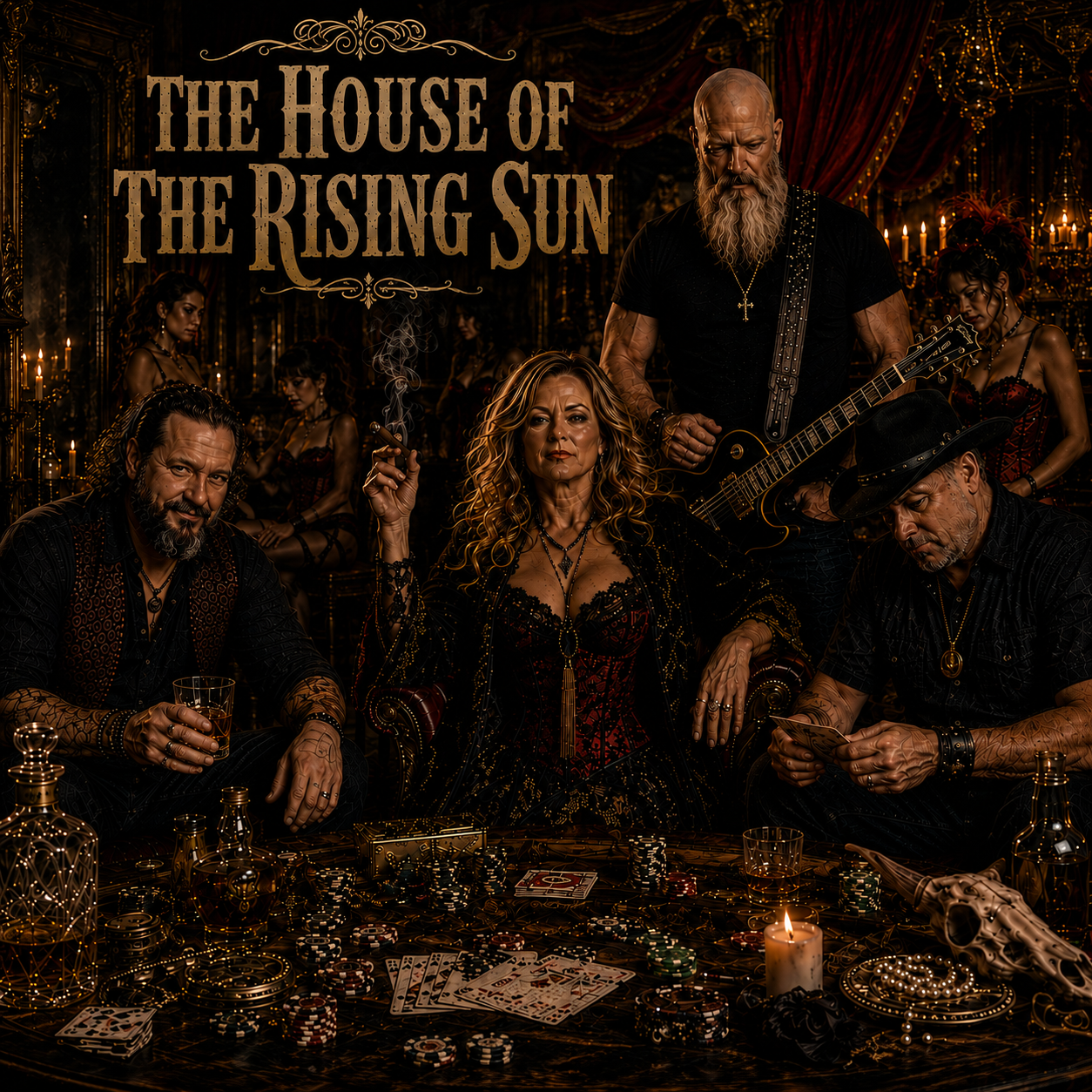
Why We Recorded The House of the Rising Sun
Most people already know The House of the Rising Sun, so there wasn't much reason for us to record it unless we were going to do something different with it. I'm a female singer, so I wanted to tell the story from the woman's point of view, but the part of the story that interested me really isn't limited to women at all. It's about what happens when somebody is handed a pretty lousy start in life before they ever have a chance to choose anything for themselves.
In our version, she was born into the House of the Rising Sun. She didn't wander into New Orleans one day, make a few bad decisions, and end up there. That was home. Her mother was a tailor, and we leave some room for the possibility that there was more to her mother's life in that house than sewing clothes. Her father was a drunk and a gambler who didn't have much besides a suitcase, a trunk, and whatever he was chasing next. Whatever choices the adults around her made, she was the kid who had to grow up in the middle of them.
And the House itself is exactly what you would expect it to be in this version of the story. It's a house of sin during Prohibition: gambling, drinking, prostitution, and whatever else came through the door. She grows up around it, and it's easy to imagine that eventually she becomes part of it herself because that's the life she knows. None of that was her choice at birth. She was simply born into somebody else's mess and had to figure out how to live in it.
That's what makes the story bigger than this one woman. Plenty of people start life that way. Maybe it isn't a brothel in New Orleans, but it can be addiction, poverty, violence, terrible parents, crime, instability, or just one bad situation after another. Sometimes you are born into a shit show. You can spend your entire life wishing you had been given a different beginning, but you still can't go back and change it. Eventually, the only question left is what you're going to do with the life you actually have.
She does get out. In our version, she leaves New Orleans and catches a westbound train because she has had enough of the place and the life that came with it. She tries something else, but part of her still knows that world better than she knows anything else.
But every road led back again To the house that knew my name.So she comes back, but she doesn't come back the same way she left. She isn't returning to curl up in a corner and spend the rest of her life talking about everything that was done to her. What happened happened. It hardened her. It taught her things, some good and some probably not so good, and when she returns, she decides she is going to use what she knows.
At the beginning of our version she says, "And it's been the ruin of many a poor girl / And God, I know, I'm one." By the end, that becomes, "And it's been the ruin of many a poor girl / Now the house is mine to run." That change is the whole reason I wanted to tell the story this way. She can't change where she came from, but she can change her place in it. The House ran her life when she was young. Now she runs the House.
That doesn't mean she suddenly thinks the place is good. She knows better than anybody what can happen there, which is why she can still tell people to warn their daughters. She means it. She knows what drinking, gambling, prostitution, and that whole life can do to somebody. At the same time, she isn't trying to save every grown person who walks through the door. People make their own choices. People have the right to sin, and she understands that better than most.
I like that she isn't squeaky clean at the end. I didn't want to turn her into some perfect person who escaped a terrible childhood, learned all the right lessons, and rode off into the sunset. Life doesn't usually work that neatly. Sometimes what you live through hardens you. Sometimes you make peace with parts of yourself that other people might not understand. Sometimes making the best of the hand you were dealt doesn't look particularly pretty from the outside.
That's what our version of The House of the Rising Sun is about for me. I told it through a woman because I'm the woman singing it, but she could be anybody. You don't get to choose the circumstances you're born into, and you can't undo what happened before you had any control over your own life. You can decide how you're going to face it, what you're going to do with it, and whether it gets to keep running you.
We approached the music with the same idea. We kept enough of the song for it to still be unmistakably The House of the Rising Sun, but Chris built our arrangement around guitar, with bass and drums behind it, and we let it sound like Rustic Ridge. We weren't interested in recreating a version that already exists. We wanted to finish the story our way.
She knows exactly what the House of the Rising Sun is. That's why she warns you about it. She also knows how to run it.
Denise
Rustic Ridge · Country Rock & Southern Rock
Hear the Music